Showing posts with label Classics. Show all posts

Monday, 5 September 2016

The Flight of the Phoenix (1965)


Robert Aldrich’s classic ‘up the creek without a paddle’ character study gets a UK Blu-ray release courtesy of Eureka.
En route to Bengazi, a cargo plane encounters a sand storm and is forced to crash land in the Sahara desert. The survivors are  mainly a mixture of oilmen and military personnel, as well as pilot Frank Towns (James Stewart) who blames himself for the crash, and his recovering alcoholic associate Lew Moran (Richard Attenborough) who may have been responsible for the engine failure in the first place.


They are stuck there. Hope soon begins to fade that they will be found by a search party. At least a hundred miles from anywhere, aeroplane designer Heinrich Dorfmann’s (Hardy Kruger) claims that they can build a new aeroplane from the wreckage of the old are initially met by ridicule and finally with the kind of desperate acceptance you get when the only alternative is certain death. As they begin to take the plane to pieces and construct something new, the water begins to run out, people begin to die, and there are still more surprises to come.


Belonging to a genre that includes Herzog’s AGUIRRE (1972), Coppola’s APOCALYPSE NOW, and others where a group of people are dropped into a hostile environment and we get to watch how they manage, Aldrich’s film copes with its ‘up the creek without a paddle’ setting (as I like to call this subgenre) by suggesting that sometimes the only way out is to build a new paddle, even if the one person who can be trusted with its design may not necessarily be trustworthy themselves. Making Dorfmann German is a bit of a masterstroke in this respect, and making him blissfully unaware that the source of his experience in design might have implications is genius. 


There’s plenty of other genius on display here as well. A collection of great performances, all working from a screenplay (by Lukas Heller) that allows, with Aldrich’s careful direction, for plenty of character development, meaning that the movie’s 142 minute running time feels nothing like it, and by the time you get to the end you feel absolutely invested in the fate of these characters. Disaster picture, desert movie, patrol film (Aldrich’s favoured term for it, apparently), THE FLIGHT OF THE PHOENIX is more than anything great and complex character film-making.


Eureka’s Blu-ray gives us a 25 minute talking head piece from Sheldon Hall that’s well worth a look. Well worth a read (before the movie if you’ve seen it before, otherwise wait until afterwards) is the little booklet essay by Neil Sinyard that gives you much more background on the film. An essential addition to any film classics library. 

Robert Aldrich's THE FLIGHT OF THE PHOENIX is out on 
Blu-ray on 12th September 2016

Sunday, 24 July 2016

Buster Keaton: The Complete Short Films (1917 - 1923)


"Timeless comedy"

Previously available only on DVD, Eureka are now releasing the complete short films of Buster Keaton on Blu-ray in an impressive four disc set.

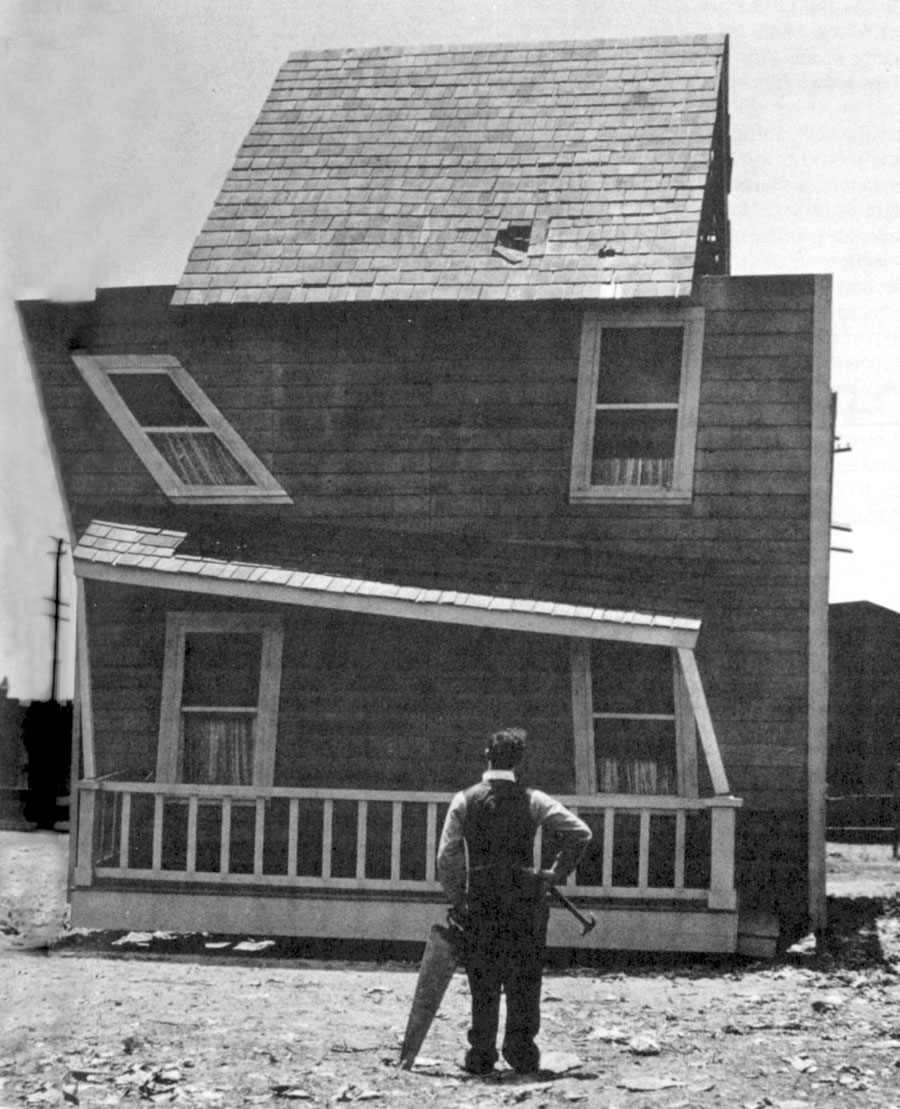
Ikea house?
And it IS impressive. What you get here is all of Keaton’s two reelers that he made between 1917 and 1923. That means thirty two films, each running around twenty minutes, with a total collective running time of nearly nine and half hours.
It will fly by, though. What’s immediately obvious on watching these is that the comedy is timeless, and that, even though some of the restorations are still rather scratchy, the skill and timing at work here shines through despite the limitations of the medium.

The threat of imprisonment features quite a bit in these
An inspiration for pretty much all comedy that followed, Buster Keaton’s influence can be felt on everything from the movies of Jackie Chan to the BBC show The Goodies, from Warner Bros. Looney Tunes cartoons to the films of Jacques Tati. Each short takes a basic - sometimes off-kilter - premise (Buster is a blacksmith, Buster gets married in Polish by mistake) and then runs with it. As soon as the comic potential of a scene is exhausted it’s onto the next one, sometimes linked by the most spurious of threads. 
And, of course, lots of them end in chases - through LA, around and up and down houses, through the wastelands of the frozen north, and so on, with remarkably resourceful comic use of various props found along the way. 

A night at the opera
Eureka’s Blu-ray set offers new 1080p restorations. As well as the films themselves we get alternate endings for CONEY ISLAND and MY WIFE’S RELATIONS, a pre-release version of THE BLACKSMITH that contains four minutes of extra footage, and there’s often the option of multiple music scores. Joseph McBride provides commentary tracks on six films. 
There’s a new exclusive video essay by David Cairns entitled That’s Some Buster, as well as an introduction by preservationist Serge Bromberg, actor Pierre Étaix discussing The Art of Buster Keaton, and audio of Buster at a party in 1962.

Fantastic acrobatic work in COPS
Finally, you get a massive 184 page book that includes a roundtable discussion on Keaton, detailed notes on each (!) film, a new essay on both versions of THE BLACKSMITH, as well as archival imagery, a chapter on the music, advice on further reading, and more. Truly impressive.

Shame
I’ll conclude this review by saying my plan was to watch these discs and then suggest which of Keaton’s shorts were most worth watching. But that wouldn’t be fair to him or to you, because actually they’re all great. There isn’t a single film here that doesn’t have its moments of startling creativity or laugh-out-loud comedy. My advice? Grab this set, free up a weekend, start on disc one and prepare to be amazed, impressed and astounded. And to laugh. Lots and lots and lots. 

Eureka are releasing BUSTER KEATON: THE COMPLETE SHORT FILMS 1917 - 1923 on Region B Blu-ray on 
Monday 25th July

Monday, 30 March 2015

The Sweet Smell of Success (1957)

Alexander Mackendrick’s brutally cynical look at the life of New York Broadway columnists gets a new Region B Blu-ray release courtesy of Arrow Films.
Press agent Sidney Falco (Tony Curtis) has a problem. His job involves leaking tidbits of useful information about his clients to Broadway newspaper columnists in the hope they will mention them. He is in awe of J J Hunsecker (Burt Lancaster), the most popular, terrifying and probably insane of them all. Hunsecker has requested Falco to break up the burgeoning relationship between Hunsecker’s sister Susan (Susan Harrison) and band guitarist Steve Dallas (Martin Milner). 


         But, Hunsecker has stressed, at no point must his sister suspect he has had anything to do with it as he does not wish to damage his somewhat unhealthy-seeming relationship with her. What follows is a complex game of sleazy deceits as Falco tries to achieve his aim, get in further with Hunsecker, and so ascend the greasy pole of what he believes to be success.


Director Alexander Mackendrick started off at Ealing studios, directing such well-loved classics as WHISKEY GALORE (1949), THE MAN IN THE WHITE SUIT (1951), and perhaps most famous of all, the glorious THE LADYKILLERS (1955). SWEET SMELL OF SUCCESS is not like any of these, in fact you’d never think this tale of callousness and manipulation was by the same man. The screenplay is by Clifford Odets and Ernest Lehman and as you might expect is filled with pithy one-liners that are delivered expertly by two leads who have quite possibly never been better. 


         Curtis especially, despite his character’s infinite dislikeability, has you in the palm of his hand as you follow him around New York. Burt Lancaster is fascinating as the brilliant, complex, and obviously highly troubled Hunsecker, all contained madness and straining rage. The black and white photography is by veteran James Wong Howe and it looks the best it ever could in this Blu-ray transfer. Finally, Elmer Bernstein’s music is the sleazy jazz icing on this particular cake, with the kind of brass arrangements that makes you feel the need to open a window or take a bath once the film is over.


Arrow’s Blu-ray of SWEET SMELL OF SUCCESS comes with a number of extras. We get an appreciation and a selected scene commentary by critic and film historian Philip Kemp, and the 1986 STV documentary on Mackendrick - ‘The Man Who Walked Away’. There’s also a trailer, reversible sleeve and a booklet with new writing on the film as well as Mackendrick’s analysis of different script drafts. There are a couple of different extras on the Criterion Region A disc, but the Arrow version looks just as good and is coming out a fair bit cheaper for UK buyers. 

Arrow Films are bringing out Alexander Mackendrick's THE SWEET SMELL OF SUCCESS on Region B Blu-ray on Monday 30th March

Monday, 23 March 2015

Network (1976)


Paddy Chayevsky’s searing satire on television news (directed by Sidney Lumet) gets a new region B Blu-ray release courtesy of Arrow Films. 
When newscaster Howard Beale (Peter Finch) is told he’s to be laid off as a result of poor ratings, he takes to the airwaves and announces on the next edition of his news programme that he’s going to kill himself live on air in a week’s time. Reaction is predictable - the network is outraged and the ratings go up. Realising that Harold might be the company’s ticket out of impending bankruptcy, newly installed company hatchet man Frank Hackett (Robert Duvall) allows rising star of TV programming Diana Christensen (Faye Dunaway) to put together an ‘entertainment news programme’ with Harold as the main attraction, surrounded by a psychic, a vox pops section and others. Old-fashioned head of news Max Schumacher (William Holden) isn’t happy and so he’s sacked, then reinstated when they realise the company can’t work without him. Soon he has other problems to deal with as he leaves his wife of twenty five years to start an affair with Diana.


Beale, meanwhile, has become the voice of the nation, his catchphrase ‘I’m mad as hell and I’m not going to take it anymore’ being shouted from rooftops and brownstone windows by an ever-increasing audience. But Beale is far from a media puppet, and his actions threaten to lead to the network’s downfall.


Probably the best thing Nigel Kneale never wrote, Chayevsky’s NETWORK is a blisteringly angry invective about what television could become. The fact that we now know it’s ended up even worse just makes the movie all the more relevant for our media-driven times. There’s virtually nothing wrong with NETWORK. The voice over that pops up at intervals when there’s a time shift or a scene needs setting feels a little awkward, but compared to all the genius that’s on display here it’s the tiniest of complaints. Lumet’s direction is nicely understated on the whole, allowing the actors to carry the film. One memorable exception is a scene which cuts between a close-up on Finch and evil corporation boss Ned Beatty, seemingly unreachable and godlike at the far end of a row of desk lamps in the company boardroom.


And where to start with the acting? How often do we ever get to see such exemplary ensemble pieces on the big screen? William Holden, older, wiser, sympathetic and about to be beaten down by a system he no longer understands? Robert Duvall, all manic screaming, equally terrifying and funny but also horribly believable, Faye Dunaway as the TV executive who admits she’s good at nothing except working in television, the quintessential Chayevsky Nothing Person. And then there’s Finch, memorably insane in a performance fuelled with such energy he almost jumps off the screen.


Arrow presents NETWORK in an excellent transfer with an uncompressed mono PCM audio track. Extras include Sidney Lumet’s entry in the series The Directors, a trailer, and Tune in Next Tuesday, a visual essay by Dave Itzkoff, who wrote the book ‘Mad as Hell: The Making of Network and the Fateful Vision of the Angriest Man in Movies. It runs for 47 minutes and is excellent, more than making up for the lack of a commentary track. You also get the usual Arrow reversible sleeve and a booklet with new writing on the movie. 

Paddy Chayevsky's NETWORK is released on region B Blu-ray from Arrow Films today, Monday 23rd March 2015

Thursday, 29 January 2015

The Thief of Bagdad (1940)


"THE LORD OF THE RINGS…1940s style"

Britain's answer to THE WIZARD OF OZ was this lavish, opulent and, for its time, quite remarkable adaptation of one of the tales from the Thousand and One Nights.  


The evil Jafar (Conrad Veidt - often imitated but never matched in a performance that became the template for villains on stage and screen for years to come) tricks wise and good King Ahmad (the very British John Justin) and usurps the throne of Bagdad. Ahmad, now blinded by Jafar's magic and reduced to beggarhood now his people believe him dead, makes friends with a young thief, Abu (Sabu). Jafar realises he needs Ahmed back so he can rouse the Princess (June Duprez) from her coma and have his Extremely Wicked way with her. Ahmad gets cast into a dungeon, but with the help of Abu he escapes and together the two embark on a series of fantastic adventures, with special effects to match.


It's difficult to appreciate now how bar-setting this film must have been when it came out, but to call it the LORD OF THE RINGS of its day might actually be an understatement. Legendary producer Alexander Korda assembled a top notch team of experts, including three directors, to film this hugely ambitious work, and it shows. For a film that's nearly 75 years old, the effects are beginning to look a little creaky but the film itself still retains its magic, going all the way up to eleven for the third act which features a tour-de-force of a giant djinn, an enormous spiderweb, some amazing set design for the quest for the all-seeing eye, and bringing it all home by featuring a return appearance by a magical clockwork flying horse. 


        Everyone outdoes themselves on this and it's a joy to behold. The wall-to-wall score (nearly two hours) by Miklos Rosza is justifiably famous, and even if Ahmed and the Princess make rather drippy love interests, it doesn't really matter because that isn't what THE THIEF OF BAGDAD is really about anyway. Miles Malleson's screenplay does a fine job of cramming in as many traditional elements of Arabian Nights fantasy as possible, and the production design is just delicious - all pastel shades and candy-coloured castles. 
Network's Blu-ray offers a fine transfer. Extras are limited to a cinema trailer and an image gallery but I wasn’t too concerned. I haven’t seen Korda’s THIEF OF BAGDAD since I was a boy and I was as glued to the screen this time as I was way back then. You will be too. 

Network released Alexander Korda's 1940 version of THE THIEF OF BAGDAD on Region B Blu-ray on 26th January 2015

Friday, 29 August 2014

Electra Glide in Blue (1973)


        One of the many cult films made in the USA in the early 1970s, James William Guercio’s sole directorial credit gets a new DVD release from Odyssey. I must confess to being aware of the title and a little bit about the film, but I’d never had the chance to catch up with it until now. The title comes from the Electra Glide, which is a brand of motorcycle presumably used by the US police in the days when this was made.


        Robert Blake (who until this I only knew as ‘Mystery Man’ in David Lynch’s LOST HIGHWAY) plays John Wintergreen, a highway patrol cop in Arizona who is short on stature but big on dreams. His ambition is to be transferred to homicide. His chance comes when an apparent suicide turns out to be a case of murder, and he is assigned to assist Detective Harve Poole (Mitchell Ryan) in investigating it. Keen to learn from his senior, it soon transpires that Poole’s methods and ways of thinking are not the high and mighty ideals Wintergreen had been anticipating, and he finds himself back on the highways by the end of the movie.


I’m not going to give away any more than that, but suffice to say that there is a lot more going on in the film’s 114 minute running time. Rather than a straightforward police procedural, ELECTRA GLIDE IN BLUE uses its fairly thin plot to depict and explore a variety of social attitudes of the period. Blake’s Wintergreen is relentlessly upbeat, even in the face of failure, which makes the movie’s finale - one of the all-time great endings of 1970s cinema - all the more poignant.


       Conrad Hall’s photography is quite wonderful, with the gorgeous Arizona landscape also enhanced by the use of the widescreen format. The acting is fine but it’s Guercio’s show, as he creates a fascinating, thoughtful and frequently mesmerising movie. Someone on imdb has claimed they have seen it over a hundred times and having seen it only once I can now understand why. Perhaps not as well known as Dennis Hopper’s EASY RIDER, or Antonioni’s ZABRISKIE POINT, ELECTRA GLIDE IN BLUE is nonetheless just as vital a movie from that period and in some ways it surpasses both of those. 


Odyssey’s DVD presents ELECTRA GLIDE IN BLUE in widescreen format. The disc provided for review had no extras and none are listed on the press release. A previous Optimum UK DVD release apparently has an introduction and commentary from director Guercio.

Odyssey are releasing James William Guercio's ELECTRA GLIDE IN BLUE on Region 2 DVD on 15th September 2014

Monday, 5 May 2014

Aguirre, Wrath of God (1972)

Werner Herzog’s classic up-the-creek-without-a-paddle tale of 16th century Spaniards and their doomed search along the Amazon for the mythical city of Eldorado is more than deserving of a first class upgrade to Blu-ray. Now, courtesy of the BFI, it finally has one - and with plenty of short subjects (and one almost feature length one) as extras.
A group of Spanish conquistadores cross the mountains of Peru and descend with the intention of travelling along the Amazon on rafts, along with cannons, horses and everything else the Spanish nobility travelling with them might need. We the viewers know they’re on to a loser right from the start but it’s only a couple of minutes in, when the camera catches sight of star, frequent Herzog collaborator, and all round uncontrollable loony Klaus Kinski, that we know they’re utterly doomed. 

         What follows is seriously great (and often seriously hard to believe they actually did it) film-making, as the intrepid group pushes ever onwards, losing men, women and sanity along the way. Except for Klaus of course, who’s already several sandwiches short of the picnic he’s forgotten to bring, and doing his best to scare the hell out of anyone within a hundred mile radius with his contagious madness. By the end he’s chasing monkeys, planning to marry his daughter, and still insisting the few remaining members of his band pilot their hopeless little raft on to inevitable destruction and death. 

From its breathtaking opening shot, AGUIRRE is never anything less than mesmerising. We’re with this doomed band of explorers all the way, through death and disease, hallucinations and madness towards the inevitable conclusion, and the film is a fascinating, and almost hypnotic, experience that rewards repeat viewings.
The BFI’s new Blu-ray is just the disc to experience those repeat viewings with. The transfer is brighter and cleaner than the previous Anchor Bay DVD release. Mono audio tracks are available in both German and English, with a 5.1 surround sound option mix in German as well. 

Extras include a trailer. and a host of short subjects: The Unprecedented Defence of the Fortress Deutschkreuz (1967), Last Words (1968), and Precautions Against Fanatics (1969). Also included is the weird and hallucinatory feature-length FATA MORGANA (1971). Consisting mainly of wide sweeping vistas of the Sahara, Algiers and Lanzarote before it became a tourist destination, FATA MORGANA looks fantastic on this Blu-ray disc. The commentary track with Herzog and Crispin Glover has been retained from the previous Anchor Bay DVD release of this title, and the AGUIRRE commentary is present and correct as well.


There’s also a stills gallery and an illustrated booklet, all wrapped up in the posh packaging of the steelbook illustrated up at the top. Herzog enthusiasts be warned, however: before you fork out for this you’ll probably want to know that the BFI is bringing out massive Blu-ray (8 discs) and DVD (seven discs) box sets later this year that are intended to feature seventeen Herzog pieces, including both features and short works.

The BFI are releasing Werner Herzog's AGUIRRE, WRATH OF GOD as a limited edition steelbook Blu-ray only on 19th May 2014 

Thursday, 1 May 2014

Theatre of Blood (1973)


It’s no secret to those who know me that THEATRE OF BLOOD is my favourite film of all time, and now here it is, lovingly presented on Blu-ray by Arrow Films, and with a host of extras as well. 
Someone is murdering theatre critics in London. Michael Hordern gets slashed to death by an assortment of vagrants and ne'er-do-wells in a grim and grotty warehouse; Dennis Price gets stabbed through the guts and dragged along a gravel path tied to the tail of a horse. The Gods of the Movies are rarely kind, but this was pretty much Dennis Price's final role, and after all the rubbish he'd been in over the previous couple of years it's nice that he was able to appear in something really good to go out on. 
        Then Arthur Lowe gets his head cut off in a scene that, for me, is where THEATRE OF BLOOD begins to show its true colours. Up until then it's all been a bit grim, but the surgery scene is played for pure comedy, and Michael J Lewis' music compliments it perfectly. In fact it all works so beautifully (including Brigid Erin-Bates' collapsing maid as a coda) that it pretty much resets the feel of the film. After that Harry Andrews' lecherous Trevor Dickman (ouch!) getting his come-uppance (sorry) at the hands of a bulbous-nosed Shylock and a sexy Portia is almost as funny despite the smoking heart gouged from his chest that Price ends up holding. Likewise Robert Coote's drowning in wine (“I wonder if he'll travel well?”) is a perfect balance of humour and horror, and it's only when we get to Coral Browne's electrocution that we're back in the realm of the properly nasty, even though she's been despatched by Price in an Afro. Robert Morley's death by being force-fed his own poodles was the only death colleagues of mine at work could remember when they had their memories jogged about the film, and the film just has to end in flames because absolutely nothing else will do. 
I still haven't mentioned the best ever fencing duel in cinema that involves trampolines, vaulting horses and ropes; BARBARELLA’S Milo O'Shea and the mighty Eric Sykes as the law; Diana Dors (“Don't keep me waiting you naughty man!”) as Jack Hawkins’ naughty wife; Ian Hendry doing his best to provide a link between the set pieces and getting the last line; some excellent London locations apparently used by necessity because the budget didn't reach to any studio work; Diana Rigg giving her all and having the time of her life as Lionheart's daughter; and last but absolutely, totally and utterly not least at all, Vincent Price. No-one else could have played Edward Kendal Sheridan Lionheart, the great actor-producer modelled on Sir Donald Wolfit and others of his ilk, with quite the same gusto, wit, skill, melancholy and style as this marvellous actor who, despite the terrible punishments (Lionheart's own word) he metes out to the people who humiliated him, is smiling all the time at the audience who loved him so much. 

Put together by a bunch of people who usually had very little to do with horror films usually (composer Michael J Lewis had to be convinced because he didn't want to do a horror film at all) THEATRE OF BLOOD actually benefits from this, especially in having, in director Douglas Hickox, someone who was much more at home shooting brutal crime dramas than witty Shakespearean revelry. As a result, Hickox let the actors get on with the acting and concentrated on making sure the murders were as gory and as horrible as possible. An article in the UK adults-only fold-out horror magazine Monster Mag at the time of its release stated that THEATRE OF BLOOD had more violence in its hundred plus minutes than the entirety of World War II, and while that's going a bit too far, the 1973 production was extremely violent for its time, particularly when compared to the kind of movies still being made by Hammer (FRANKENSTEIN & THE MONSTER FROM HELL) and Amicus (FROM BEYOND THE GRAVE).
Arrow’s Blu-ray presentation is, on the whole, excellent. For a film I’ve seen innumerable times this is the best it has ever looked, with only a few scratches here and there and some rather dull sound on occasion to mar the proceedings. Extras include a commentary track by all four League of Gentleman (Reece Shearsmith, Mark Gatiss, Steve Pemberton and Jeremy Dyson). Like their previous BLOOD ON SATAN’S CLAW track, this really is like watching the film with friends who love it too, and there are enough laugh out loud moments to make this extra alone worth the price of the disc.

Michael J Lewis has always been one of my favourite movie composers - for THEATRE OF BLOOD, THE MEDUSA TOUCH and JULIUS CAESAR as well as many others. So I have to give full marks to Calum Waddell for tracking him down, interviewing him, and getting him to play key themes from the movie on the piano for a featurette on the disc. He's always been a bit of a musical hero of mine, and I was delighted to discover he still retains his Aberystwyth accent. I must admit the black and pink cowboy hat, however, did come as a bit of shock.
David del Valle delivers a touching appraisal of Price’s life and career in A Fearful Thespian and actress Madeleine Smith gives her reminiscences in Staged Reaction. There’s also an interview with Price’s daughter Victoria.
The steelbook is gorgeous and reproduces the UK quad poster that I had on my bedroom wall for many years as a boy, but there’s also some lovely new reversible cover art for the standard package. Some of the front of house stills (I still have the entire set in my files) are reproduced in the accompanying booklet as well. 
Arrow's THEATRE OF BLOOD package is just lovely - go and buy it already as a big thank you to the company for bringing us one of the Blu-ray releases of the year.

Arrow Films were due to release THEATRE OF BLOOD on 5th May 2014 but because of a glitch on the disc the new release date is 19th May 2014

Tuesday, 15 April 2014

Seven Samurai (1954)

It’s the sixtieth anniversary of Akira Kurosawa’s classic action drama that’s inspired everything from Westerns (four MAGNIFICENT SEVEN films) to science fiction (Jimmy T Murakami’s BATTLE BEYOND THE STARS) to comedy (The ‘Black Seal’ episode of the first series of THE BLACK ADDER). To celebrate this fact, (and the fact it’s their all-time No.1 bestselling title) the BFI are bringing out a remastered version of the film in High Definition on DVD, as well as a limited edition Blu-ray steelbook.
So much has been written about this film over the years that it would be redundant of me to add to what has already been said, but in case you’ve never heard of any of the above movies the basic plot is this: in the rural Japan of the late 1600s a poverty-stricken village is regularly beset by bandits who plunder the meagre harvest the villagers manage to till from the soil of the surrounding area.

        In an attempt to prevent this from happening for the umpteenth time they recruit seven masterless samurai to defend them (the history of how samurai became wanderers in this period is all explained in more detail in the booklet you get with the film). Over the course of the film’s 198 minute running time (yes, you’ll need a cushion) we see how the samurai draw up a plan to defend the village and how the villagers themselves become involved in the ensuing battle.

It’s a testament to the genius of Kurosawa’s film that you come away from watching it feeling its imitators have only skimmed the surface of an immensely profound and ambitious piece of work. The final battle is a grim, mud-splattered and rain-soaked affair, and there’s no sense of respite or resolution for the survivors at the end.

The BFI’s remastering of SEVEN SAMURAI provides us with the opportunity to play the film with or without the original intermission (which occurs at about 1hour 42 minutes in). Oddly, this point isn’t marked as a chapter break. The image is fine, and the subtitles are clear, readable, and well translated. Extras include the aforementioned very useful booklet, a 47 minutes featurette in which Asian cinema expert Tony Rayns discusses The Art of Akira Kurosawa, and there’s a trailer as well. The Blu-ray wasn’t available for review but the DVD looks really pretty good for a film from 1954.

The BFI are releasing Akira Kurosawa's SEVEN SAMURAI on DVD and Limited Edition Blu-ray Steelbook on 21st April 2014

Monday, 9 December 2013

The Long Goodbye (1973)

Robert Altman’s 1973 adaptation (from a screenplay by Leigh Brackett) of the Raymond Chandler novel gets the Blu-ray treatment courtesy of the Arrow Academy label. And what a lovely package it is.
Elliott Gould plays chain-smoking private investigator Phillip Marlowe, living in a tiny turret flat in Los Angeles accessed by a private elevator and next door to a house filled with topless young lady hippies, His only friends are his cat who only likes one specific type of tinned food (some of the best cat acting I’ve seen in a long time, by the way) and Terry Lennox (Jim Bouton). When Lennox asks Marlowe for a one-way lift to Tijuana it’s the start of a complex story that kicks off with the police pulling the detective for questioning after Lennox’s wife is found with her skull beaten in. Lennox is subsequently found to have committed suicide and the case is apparently closed. However, a request from pretty Eileen Wade (Nina van Pallandt who went on to do not much else of significance but did appear in Albert Pyun’s THE SWORD AND THE SORCERER) for Marlowe to locate her missing husband Roger (the ever-bonkers Sterling Hayden from DR STRANGELOVE, THE FINAL PROGRAMME and DEADLY STRANGERS) proves to be more complicated than he expects, especially when gang boss Marty Augustine (Mark Rydell who directed ON GOLDEN POND) turns up demanding the $350 000 Marlowe owes him.
Probably the most noir a 1970s thriller set in Los Angeles could be, Robert Altman’s film gives us a cynical view of both the city in which it is set, and the people who live there. This is a crumbling, tarnished depiction of LA, where hedonism feels tired and few question the casual violence of organised crime. Holding everything together is a bravura performance by Gould, who manages to tiptoe just the right side of rumpled seediness to be likeable. Altman’s direction gives rise to a whole host of interesting camera setups, many of which show a considerable wit at work. Many of the dialogue scenes, especially near the beginning, feel improvised, and John Williams supplies a curiously experimental music score which consists solely of the title theme but interpreted in many different ways (some cleverly segueing into one another during scene changes).
Arrow's widescreen 2.35:1 presentation is very nice, with the only blemish being some kind of hole in the top right of the print that occurs at 1:14 and is present as a distracting white dot for about a minute. Otherwise it looks great. 

There are loads of extras, including material ported over from the 2002 DVD release. These include interviews with Robert Altman, Elliott Gould, and director of photography Vilmos Zsigmond. There’s also ‘Giggle and Give In’ - Paul Joyce’s documentary on Altman, Elliott Gould discussing the film on stage, Maxim Jakubowski on Hard Boiled fiction, David Thompson on Robert Altman, Tom Williams on Raymond Chandler, a trailer, radio spots, a reversible sleeve and a booklet. All in all it’s a very fine presentation of a very fine film.

Arrow will be releasing Robert Altman's THE LONG GOODBYE on Blu-ray on the Arrow Academy label on the 16th of December 2013

Thursday, 14 November 2013

Gaslight (1940)

I’ve been a fan of British film director Thorold Dickinson since watching his 1949 classic THE QUEEN OF SPADES (also reviewed on this site). I was therefore delighted to learn that the BFI were bringing out his British version of Patrick Hamilton’s play GASLIGHT. The better known American adaptation was directed by George Cukor, starred Charles Boyer, Ingrid Bergman and Joseph Cotton, and came out in 1944. MGM were so worried that Dickinson’s earlier film would affect the success of their own picture that they tried to prevent its release in the US, with a clause in the remake rights ordering that all copies of the original's negative be destroyed. Thankfully Dickinson himself made a ‘secret’ print which was subsequently donated to the BFI to make the version presented here.
The film opens with little old Alice Barlow being strangled by a shadowy figure who then proceeds to ransack her house. It’s the kind of scene that’s been reproduced many times since, but in 1940 it was undoubtedly quite horrifying. The killer is never found and Alice’s house is put up for sale. Years later the Mallens move in. Paul Mallen (Anton Walbrook) is in the process of convincing his wife Bella (Diana Wynyard) that she is losing her sanity. He hides personal objects and keeps any mail that comes for her. The top two floors of the house are never used although sometimes Bella hears someone walking around up there and at the same time the gas lamps in the rest of the house go dim.
A retired policeman called Rough (Frank Pettingell) suspects Paul of being Alice Barlow’s killer, who went by the name of Louis Bauer. It turns out that, while going through Paul’s things, Bella found an envelope addressed to Bauer. In order to protect his new identity Paul / Louie is trying to drive Bella insane. He has returned to the Barlow house in the hope of finding the rubies he killed Alice for in the first place.
For a film made in 1940, Thorold Dickinson’s GASLIGHT still holds up today as a well-made precursor of what would become know as the giallo. The unseen killer in black at the start, the violence of the murder, and the wide-eyed heroine who fears she may be going insane became staples of everything from the Hammer psycho thrillers of the 1960s to the hedonistic Italian gialli of Sergio Martino and others in the 1970s (most of them starring Edwige Fenech in one compromising position after another). It helps immensely that the BFI’s Blu-ray transfer of Dickinson’s film is so pristine, giving it a look that makes it almost impossible to believe that this film was made over seventy (that's SEVENTY) years ago.
The BFI’s dual format edition presents the film on both Blu-ray and DVD formats. There’s a booklet with essays on the film, and, as extras on the disc, five short films either directed or written by Dickinson.
GASLIGHT is a cracking piece of early 1940s British cinema. George Cukor’s 1944 version is impressive, but Thorold Dickinson’s precursor really is something very special indeed. Highly recommended for fans of top quality psychological thrillers from a bygone age.

The BFI will be releasing Thorold Dickinson's GASLIGHT as a Dual Format Blu-ray and DVD edition on its BFI Flipside label on 18th November 2013